How to Manage an Anxiety Attack:
Effective Strategies for Coping and Calming Your Mind
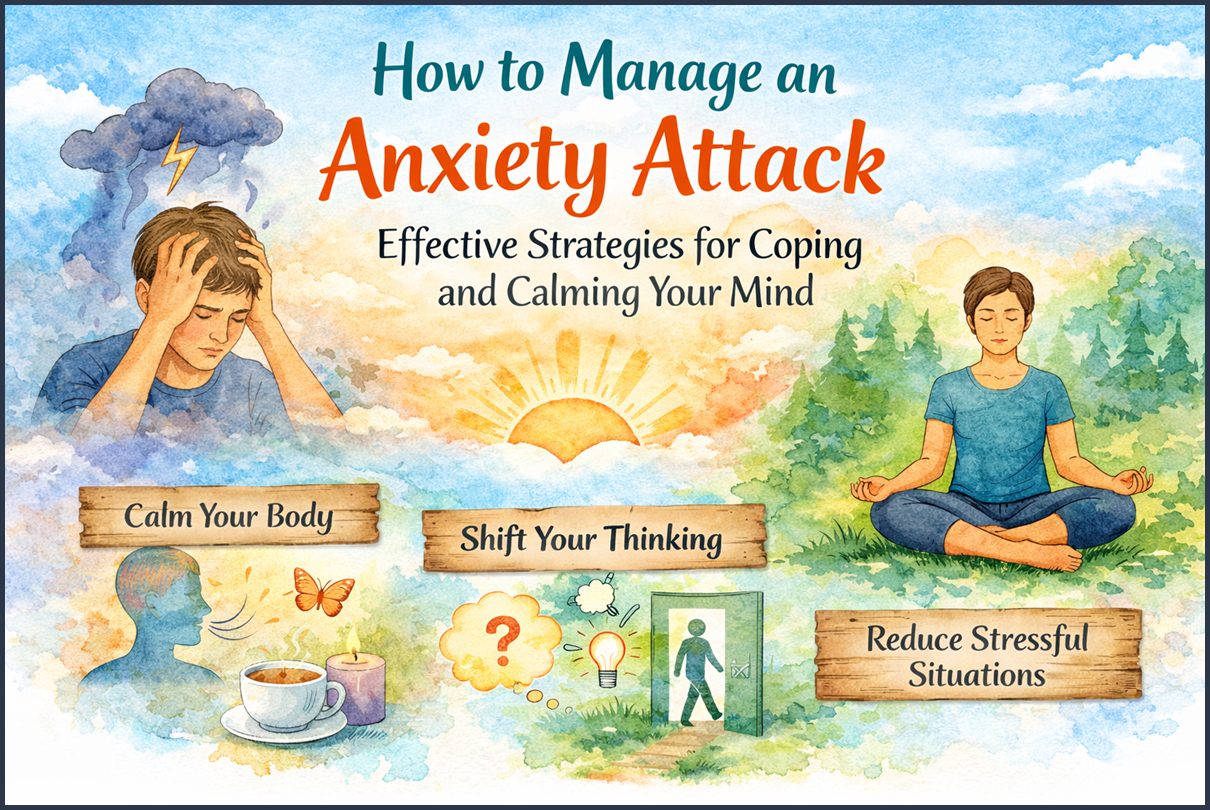
An anxiety attack can feel overwhelming, intense, and sometimes frightening. When it happens, your heart may race, your breathing may become shallow, and your thoughts might spiral out of control. For many people, anxiety attacks can create the sensation that something terrible is about to happen, even when there is no immediate danger.
The good news is that anxiety attacks are manageable. With the right techniques, you can calm your body, regain control of your thoughts, and reduce the intensity of the experience. Learning how to respond during these moments can make a significant difference in how quickly you recover and how confident you feel when anxiety arises.
In this guide, we’ll explore practical and effective strategies to help you manage an anxiety attack and regain a sense of calm.
Understanding Anxiety Attacks
Before learning how to manage an anxiety attack, it helps to understand what is happening inside your body and mind.
Anxiety attacks occur when the body’s fight-or-flight response becomes activated. This response is designed to protect you from danger, but sometimes it can be triggered by stress, worry, or overwhelming emotions rather than an actual threat.
Common symptoms of an anxiety attack include:
-
Rapid heartbeat
-
Shortness of breath
-
Sweating
-
Muscle tension or trembling
-
Dizziness or light-headedness
-
Racing thoughts or fear of losing control
While these symptoms can feel alarming, they are typically temporary and will pass. Knowing this can help reduce the fear that often makes anxiety worse.
Step 1: Calm Your Body with Controlled Breathing
One of the most effective ways to manage an anxiety attack is to focus on calming your physical body. Anxiety often causes shallow or rapid breathing, which can intensify feelings of panic.
Practicing slow, controlled breathing can signal to your nervous system that it is safe to relax.
Try this simple breathing exercise:
-
Inhale slowly through your nose for four seconds.
-
Hold your breath gently for four seconds.
-
Exhale slowly through your mouth for six seconds.
-
Repeat for several minutes.
Deep breathing helps reduce physical tension, slow your heart rate, and restore a sense of balance.
You can also try progressive muscle relaxation, where you gently tense and release different muscle groups in your body. This can help release built-up stress and promote relaxation.
Step 2: Ground Yourself in the Present Moment
During an anxiety attack, the mind often becomes overwhelmed by worries about the future or fears about what might happen next. Grounding techniques help bring your focus back to the present moment.
A popular grounding method is the 5-4-3-2-1 technique:
-
Name 5 things you can see
-
Identify 4 things you can touch
-
Listen for 3 sounds around you
-
Notice 2 things you can smell
-
Focus on 1 thing you can taste
This exercise encourages your brain to shift attention away from anxious thoughts and reconnect with your surroundings.
Grounding can also involve simple actions such as holding a cold object, touching textured surfaces, or focusing on your breathing rhythm.
Step 3: Shift Your Thinking Patterns
Anxiety attacks are often fueled by negative or catastrophic thoughts. When your mind starts imagining worst-case scenarios, your body responds with stress and panic.
Learning to gently challenge these thoughts can help break the anxiety cycle.
Ask yourself questions like:
-
“Is this fear based on facts or assumptions?”
-
“What is the most realistic outcome?”
-
“Have I handled situations like this before?”
Instead of thinking “Something terrible is going to happen,” try reframing the thought as “This feeling is uncomfortable, but it too will pass.”
Practicing positive and balanced thinking can help reduce the emotional intensity of an anxiety attack.
Step 4: Step Away from Stressful Situations
Sometimes anxiety attacks are triggered by specific environments or stressful circumstances. If possible, removing yourself from the situation for a short time can help you regain composure.
Consider stepping outside for fresh air, moving to a quieter space, or taking a brief walk.
This temporary break gives your mind time to slow down and process what is happening without additional pressure.
Once you feel calmer, you may find it easier to return to the situation and address it with a clearer mindset.
Step 5: Use Calming Activities to Reset Your Mind
After an anxiety attack begins to fade, engaging in relaxing activities can help your mind and body fully recover.
Some calming activities include:
-
Listening to soothing music
-
Taking a warm bath or shower
-
Practicing meditation or mindfulness
-
Going for a gentle walk in nature
-
Writing your thoughts in a journal
These activities encourage relaxation and help restore emotional balance.
Over time, regularly practicing calming habits can also reduce the frequency and intensity of anxiety attacks.
Building Long-Term Anxiety Management Habits
While managing anxiety attacks in the moment is important, developing long-term coping strategies can make a lasting difference.
Healthy lifestyle habits that support mental well-being include:
-
Getting regular exercise
-
Maintaining consistent sleep patterns
-
Limiting caffeine and stimulants
-
Practicing mindfulness or meditation
-
Seeking support from friends, family, or professionals
If anxiety attacks occur frequently or interfere with daily life, speaking with a therapist or mental health professional can provide additional tools and guidance.
Final Thoughts
Anxiety attacks can feel intense, but they are temporary and manageable. By focusing on calming your body, grounding yourself in the present moment, and shifting your thinking patterns, you can reduce the impact of an anxiety attack and regain control.
Everyone experiences anxiety differently, so it may take time to discover which techniques work best for you. The key is to practice patience, self-compassion, and healthy coping strategies.
With the right approach, it is possible to navigate anxiety more confidently and create a greater sense of calm in your daily life.
Thank you for reading our Article on How to Manage an Anxiety Attack –
Please Click Here to Return To Home Page