Combating Anxiety and Depression: Why Sharing and Vulnerability Matter
Human beings are naturally social. From the earliest stages of life, we depend on connection, communication, and support from others. Relationships help us grow, learn, and navigate life’s challenges. When it comes to struggles like anxiety and depression, however, many people feel tempted to withdraw from others instead of reaching out. Ironically, the very thing that can help the most—connection—is often the thing we avoid.
One of the most powerful tools for improving mental health is vulnerability. Sharing what we are going through with someone we trust can feel frightening, but it can also be incredibly healing. In this article, we’ll explore the common myths that stop people from opening up, and why vulnerability can play a vital role in overcoming anxiety and depression.
Why Vulnerability Feels So Difficult
Despite our need for connection, many people struggle with the idea of being vulnerable. Opening up about emotional pain can feel uncomfortable and risky. Thoughts like these often come to mind:
-
No one will understand what I’m going through.
-
People will judge me if they know how I really feel.
-
Talking about it won’t change anything.
-
Being vulnerable makes me look weak.
-
I should be able to handle this on my own.
-
I don’t need help.
These beliefs can be powerful barriers. They convince us that silence is safer than sharing. Unfortunately, keeping everything inside can make anxiety and depression feel even heavier.
The truth is that these thoughts are often misleading. Many people assume that vulnerability will lead to rejection or embarrassment, when in reality it frequently leads to understanding and support. Sharing your struggles doesn’t make you weak—it makes you human.
The Benefits of Opening Up
When people allow themselves to be honest about what they’re experiencing, several positive things can happen. Vulnerability has the potential to transform both your mental health and your relationships.
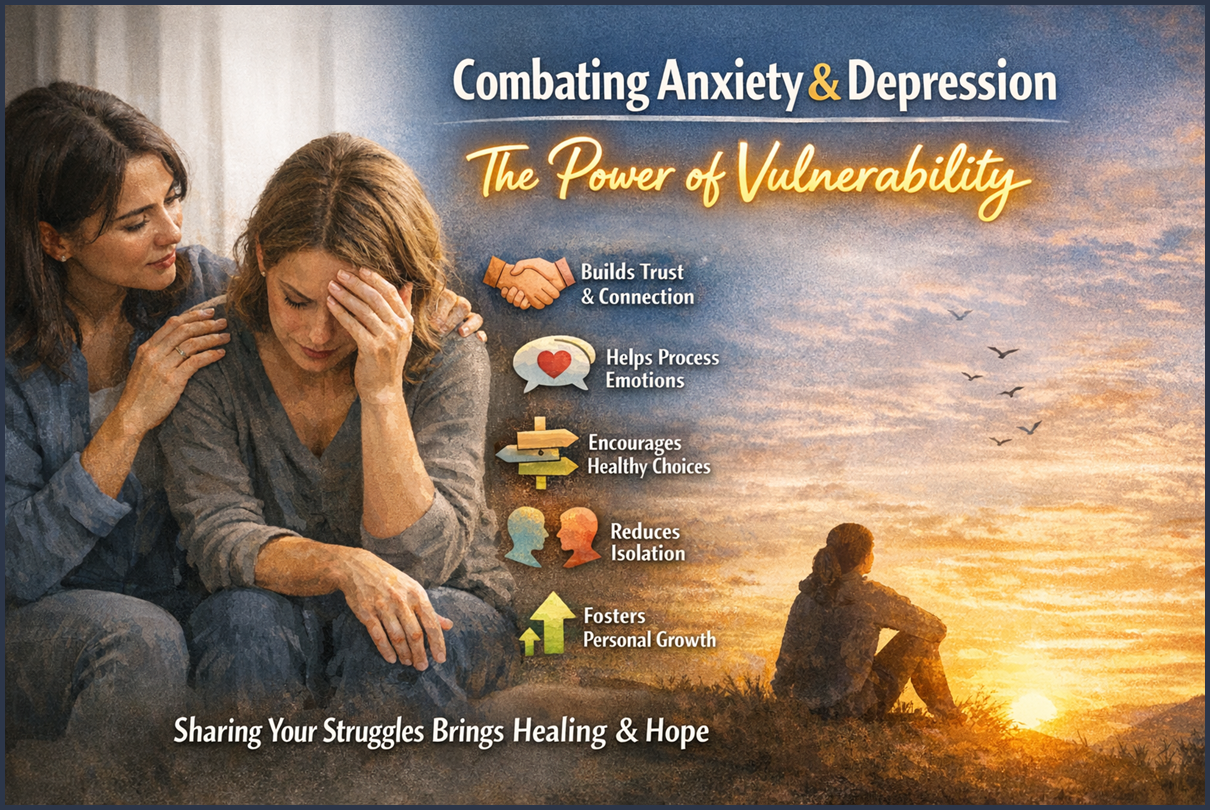
1. It builds trust and deeper relationships
When you share something meaningful with another person, it creates a stronger sense of connection. Honest conversations allow people to understand one another on a deeper level. Trust grows when both people feel safe to be authentic.
2. It helps you process your emotions
Anxiety and depression can cause thoughts and feelings to spiral internally. Speaking about your experiences can help you organize your thoughts and see things more clearly. Sometimes simply putting feelings into words can provide relief.
3. It encourages healthier decisions
When you talk openly with someone who cares about you, they can help you gain perspective. Trusted friends, family members, or mentors can gently challenge negative thinking patterns or unhealthy habits, helping you make choices that support your well-being.
4. It reduces feelings of isolation
One of the most painful parts of anxiety and depression is the sense of being alone. Sharing your struggles reminds you that you are not facing life’s difficulties by yourself. Often, you’ll discover that others have experienced similar challenges.
5. It supports personal growth
Vulnerability encourages self-awareness and emotional maturity. By acknowledging your struggles instead of hiding them, you give yourself the opportunity to grow, heal, and move forward.
Combating Anxiety and Depression is a Team Sport!
Choosing the Right Person to Talk To
While vulnerability is powerful, it’s important to share with someone who is capable of providing support. Not everyone is ready or equipped to handle serious emotional conversations, so choosing the right person matters.
Here are a few qualities to look for in someone you trust:
They listen without judgment.
A supportive person will allow you to speak openly without criticizing or dismissing your feelings.
They genuinely care about your well-being.
They want the best for you and are willing to support you during difficult moments.
They can be honest with you.
A good friend won’t simply agree with everything you say. If you are making harmful choices, they will respectfully encourage you to reconsider.
They focus on understanding rather than fixing.
Sometimes people immediately jump into “problem-solving mode.” While advice can be helpful, what you often need most is someone who listens and tries to understand your experience.
If you don’t feel comfortable opening up to friends or family, consider speaking with a counselor, therapist, or support group. Mental health professionals are trained to guide these conversations in a safe and constructive way.
Sharing Without Reliving the Past
Another concern people often have about vulnerability is the fear of being overwhelmed by painful memories. It’s important to remember that sharing your story doesn’t mean dwelling on every detail forever.
You can talk about your experiences in a way that helps you release them rather than remain trapped in them. Once you’ve expressed your feelings and reflected on them with someone you trust, you can begin focusing on the future.
The past may shape us, but it does not have to define us. Opening up about difficult experiences can be the first step toward forgiveness, healing, and personal renewal.
Moving Forward with Courage
Being vulnerable is rarely easy. It requires courage to admit that you’re struggling and to invite someone else into that part of your life. Yet the rewards can be profound. Honest conversations create connection, clarity, and emotional relief—three things that are especially important when facing anxiety or depression.
Remember that you do not have to face everything alone. Reaching out to someone you trust can lighten the emotional burden and remind you that support is available.
If you’re currently struggling, consider taking one small step today. Send a message to a friend, schedule a conversation with a loved one, or speak with a mental health professional. Opening up might feel uncomfortable at first, but it could be the beginning of meaningful healing.
Vulnerability is not a weakness—it is a strength that allows us to connect, grow, and move forward. By sharing our struggles with others, we create space for understanding, compassion, and hope.
Thank you for reading our Article on Combating Anxiety and Depression – Please Click Here to Return To Home Page